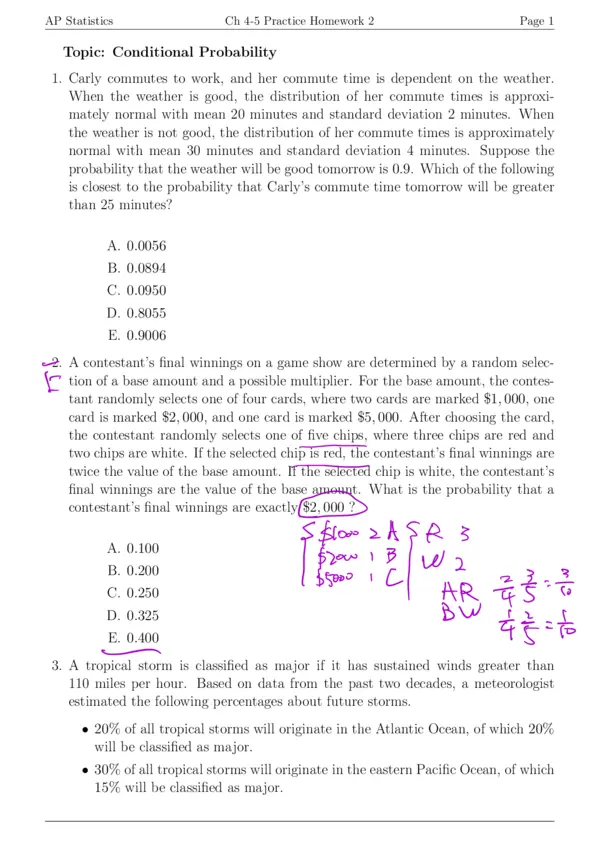
This document provides practice problems on applying conditional probability, independence of events, and fundamental probability rules to various scenarios, including normal distributions, game shows, weather patterns, and survey data.
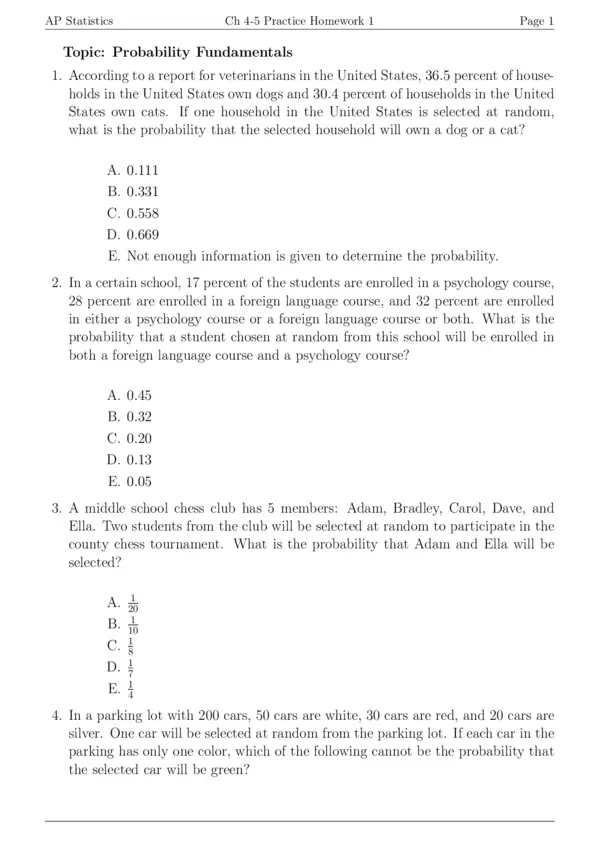
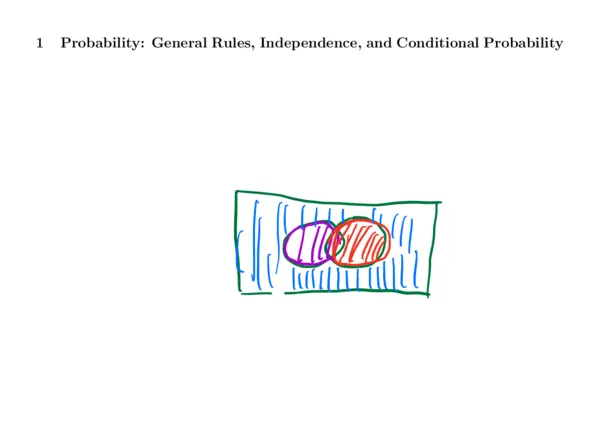
This document covers fundamental probability concepts, including calculations for mutually exclusive events, the general addition rule, combinations, and conditional probabilities, as well as their interpretations in various real-world scenarios.
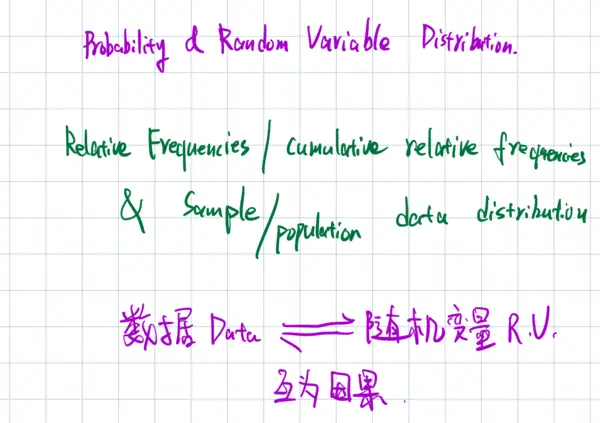
This document covers fundamental concepts of probability, random variable distributions (PDF, CDF, marginal, conditional), and the effects of linear transformations on single and multiple independent random variables.
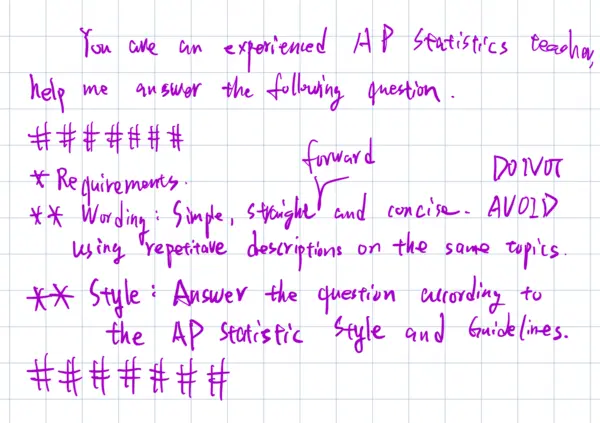
This document outlines the requirements and style guidelines for an experienced AP Statistics teacher to answer a forthcoming question, emphasizing simplicity, conciseness, and adherence to AP Statistics standards.
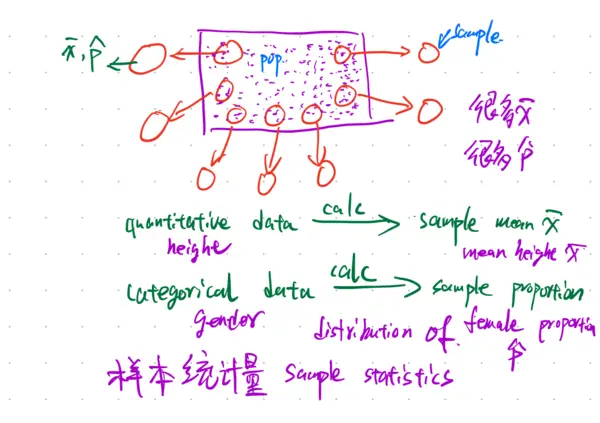
This document introduces sampling distributions for sample means and proportions, outlines their properties and necessary conditions, and demonstrates the steps of hypothesis testing for population proportions.
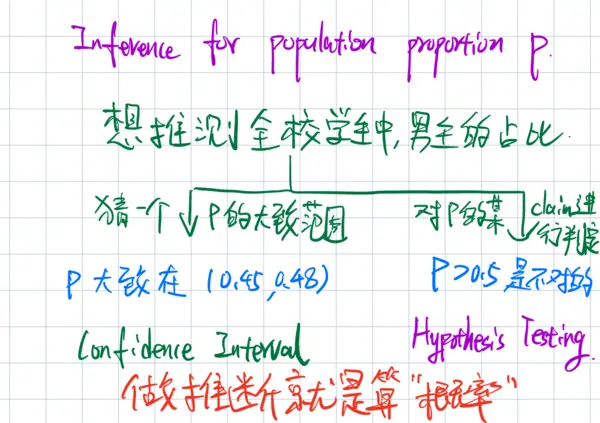
This document details inferential statistics for a single population proportion, explaining both confidence interval construction and the four-step process for hypothesis testing, including conditions, P-value interpretation, and error types.
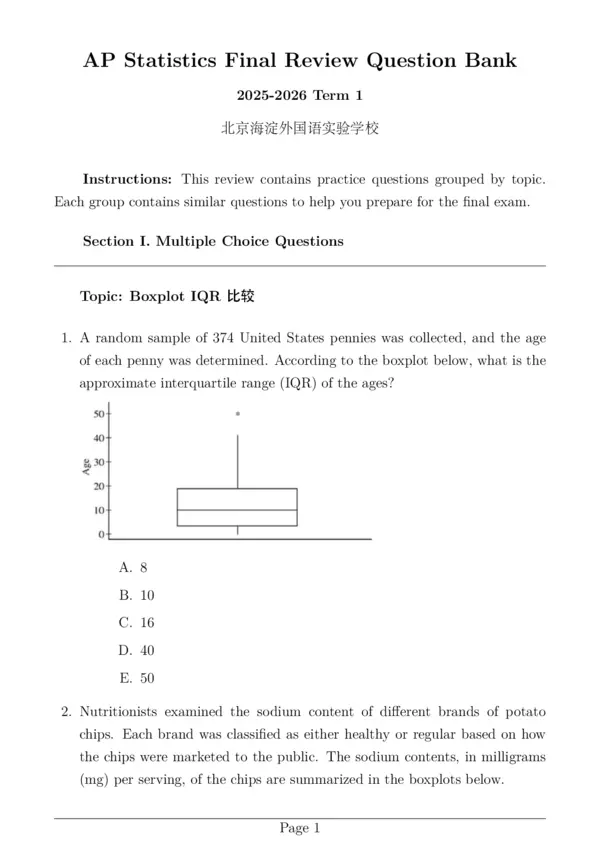
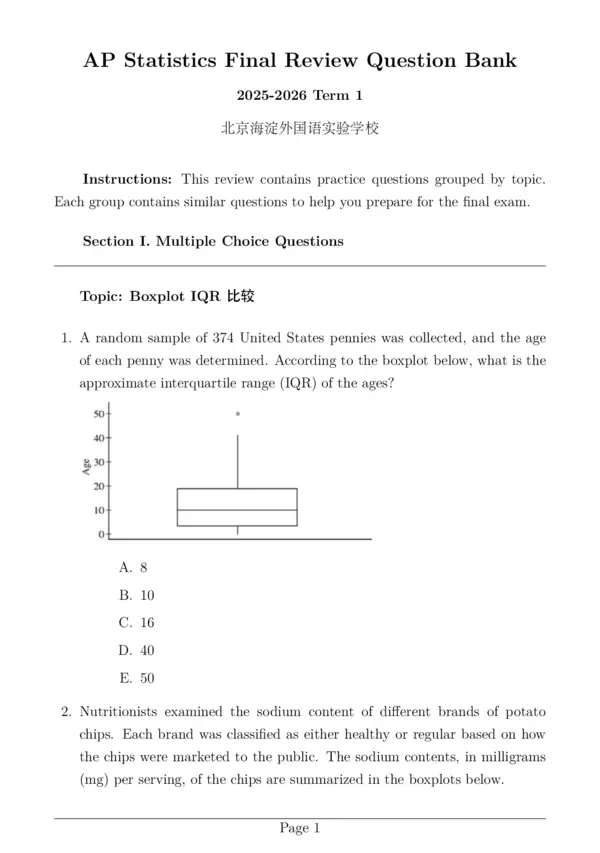
This document provides a comprehensive review of AP Statistics topics including data exploration, two-variable data analysis, probability distributions, random variables, and sampling distributions through multiple-choice and free-response questions.
This document provides a comprehensive review of AP Statistics topics including descriptive statistics, two-variable data analysis, probability rules, discrete probability distributions, sampling distributions, and an introduction to statistical inference for means and proportions.
This document provides a comprehensive review of fundamental probability rules, properties of discrete random variables, applications of the normal distribution, characteristics of binomial and geometric distributions, and principles of sampling distributions for means and proportions.
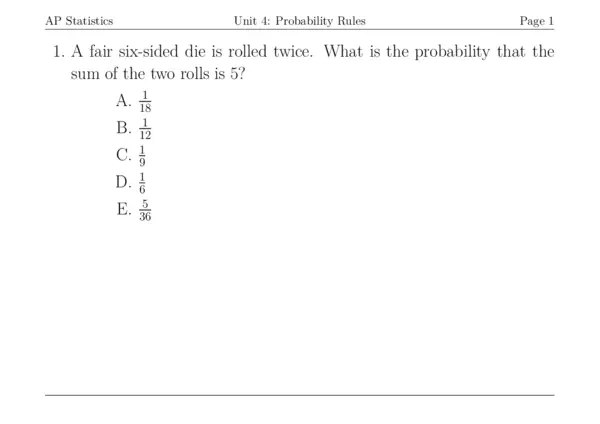
This document presents multiple-choice problems that assess understanding of fundamental probability rules, including calculating probabilities for independent and mutually exclusive events, unions, intersections, complements, and conditional probabilities.